6 Marvel Rivals maps and the hero rosters they force you to play
Video: The MAP Decides Our Heroes in Marvel Rivals
You can order the same kind of articles for your own video to boost it on YouTube and Google. Just message the Telegram bot @sat_sit_bot. It writes articles around your video, embeds the video and publishes them on popular niche websites (no ads). Your first 50 articles are free.
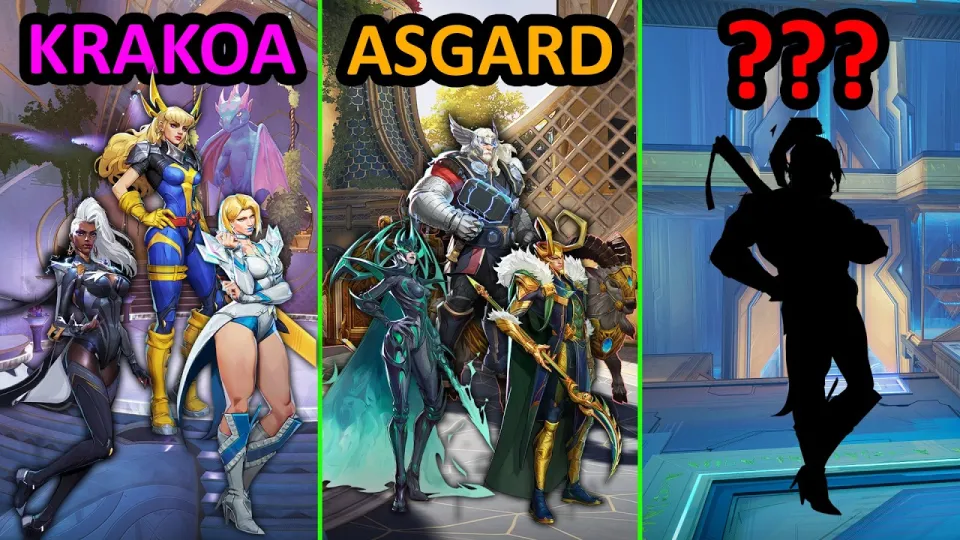
Marvel Rivals has more than 40 playable heroes, and a map-locked hero challenge is a simple way to force variety: before each match you look at the map you queued into and pick only from the heroes connected to that location. Klyntar means Venom, Asgard means Thor, Loki or Hela, and so on. Streamer Salty Phish ran exactly this format in quickplay during Season 9, The Mystery of Thebes, and you can watch the full run on his Twitch channel if you want to see the rule enforced live.
The idea works because Marvel Rivals maps are not generic arenas. Each one is a specific place in the Marvel universe with its own cast, and the roster is big enough that almost every location has a defensible shortlist — plus a few arguments about who technically belongs.
How the map-locked hero rule actually works
The rule is one sentence long: the map decides the hero pool, and the player has to build a team composition out of that pool. In practice it means a few concrete constraints:
- Queue into a match and read the map name before locking in.
- Pick only heroes with a documented link to that location — birthplace, employer, team membership or a story beat in Rivals' own lore.
- If the pool is too small for a balanced comp, stretch the definition (a faction that operates there, a skin line tied to the region) rather than breaking the rule.
- Keep it in quickplay; ranked is not the place to test a one-map-only roster.
The interesting part is step 2, because Marvel Rivals writes its own lore rather than copying the films. Characters who never met in the comics share voice lines, factions get reorganized, and a map's background art sometimes settles an argument that the hero select screen leaves open.
Marvel Rivals maps and their hero pools
Each map has a core pick that nobody disputes and a wider list that depends on how strict you want to be.
- Klyntar — Venom is the anchor. The symbiote homeworld map also justifies a stretch to other symbiote-adjacent characters, and the Guardians of the Galaxy have a reason to be there in Rivals' backstory.
- Asgard — Thor, Loki and Hela are the obvious three; the map is literally their home realm.
- Shin-Shibuya — a 2099 Tokyo map, which makes futuristic and time-displaced characters fair game, not just Psylocke and Spider-Man variants.
- Wakanda spaceport — Black Panther is the host, but the map is an intergalactic Wakandan hub, so spacefaring heroes fit.
- Midtown and Lower Manhattan — New York is the most crowded location in Marvel, which makes it the loosest pool of all.
- Yggsgard and other hybrid maps — combined locations where you can justify a pick through either half of the map.
Why Shin-Shibuya is the most argued-about map
Shin-Shibuya takes place in 2099, and that single fact expands the roster far beyond the Spider-family. Marvel's 2099 timeline includes futuristic versions of several heroes, and the map's skyline includes a Stark-Fujikawa building — a future subsidiary of Tony Stark's company — which gives Iron Man a legitimate claim to the location, complete with in-game dialogue referencing it.
Punisher and Captain America also exist as 2099 characters in Marvel continuity, so a strict lore reading allows them on Shin-Shibuya alongside Psylocke. The practical result is that the map's pool is bigger than it looks, and a team built only from Spider-people is a choice, not a requirement.
The Collector's museum and other contested picks
Some maps are decided not by geography but by who is imprisoned or employed there. The Collector's museum map is the clearest example: in Rivals' backstory, Jeff the Land Shark, Psylocke and Mantis were all held in the Collector's collection, which makes them museum characters regardless of where they were born.
Wakanda produces a similar argument. The spaceport map shows the Milano — the Guardians' ship — departing for Klyntar, and in Rivals lore the Guardians were hired by Black Panther to stop the symbiotes, with Shuri involved in the mission. That pulls Star-Lord, Rocket, Groot, Gamora, Drax and Mantis into the Wakandan pool, and a loose reading can include Venom as well. Winter Soldier is another Wakanda case: in Rivals continuity the Wakandans built his arm, and he says as much in a voice interaction with Iron Man.
New York is the loosest hero pool in the game
Lower Manhattan and Midtown are where the rule almost collapses, because so many Marvel characters live in New York. Devil Dinosaur is the test case: Moon Girl's red dinosaur operates out of New York City, so he belongs on a New York map even though a dinosaur in Manhattan sounds like a joke. Once you accept that, the New York pool includes most street-level heroes, the Fantastic Four, Spider-Man's supporting cast and a large share of the Avengers.
That is not a flaw in the challenge — it is the point. Some maps force a narrow, awkward composition; others let you play almost anything. The variety between a five-hero Asgard pool and an open New York pool is what keeps a map-locked run from turning into the same match six times.
Common questions about map-based hero challenges
Most doubts about this format come down to three things: how strict the lore has to be, whether skins count, and whether the challenge is playable in ranked.
The short answers: use in-game lore as the tiebreaker when comics and films disagree; treat a skin line tied to a region as a valid argument rather than a cheat; and keep the run in quickplay, where a deliberately suboptimal composition does not cost anyone rank. If a map's pool feels too thin, add one faction that operates there instead of abandoning the rule.
Links from the video
- Salty Phish on Twitch
- Salty Phish on Twitter
- Salty Phish on TikTok
- Salty Phish on Reddit
- Salty Phish on Instagram
Summary
A map-locked hero challenge turns Marvel Rivals' location design into a deck of restrictions: Klyntar hands you Venom, Asgard hands you the royal family, Shin-Shibuya opens up 2099, and New York hands you almost everything. The format works because Rivals' own lore — the Collector's prisoners, the Wakandan spaceport and the Milano, Bucky's Wakandan arm, the Stark-Fujikawa tower — gives every map a defensible roster. Salty Phish built the run around that idea in Season 9, and the arguments in the comments show how deep the lore goes. For more live runs of the same format, follow Salty Phish on Twitch.
Key takeaways
- The challenge rule: the random map you queue into decides which hero you are allowed to play for that match.
- Klyntar maps lock the pick to Venom; Asgard maps open up Thor, Loki and Hela.
- Shin-Shibuya is a 2099 Tokyo map, which is why Punisher and Captain America are argued as valid picks there.
- Wakanda's spaceport shows the Milano, tying the Guardians of the Galaxy to that map in Rivals lore.
- Devil Dinosaur lives in New York with Moon Girl, so he counts as a Lower Manhattan character.
Source: The MAP Decides Our Heroes in Marvel Rivals · Markdown version
Questions & answers
How do you decide which heroes are allowed on each Marvel Rivals map?
Start with the hero whose origin or home is the map itself — Venom on Klyntar, Thor or Loki on Asgard, Black Panther on Wakanda. Then add characters with a documented connection in Rivals' own lore, such as prisoners in the Collector's museum or the Guardians flying out of the Wakandan spaceport. Use comics and film knowledge only as a tiebreaker.
Why do people say Iron Man counts on Shin-Shibuya?
Shin-Shibuya is set in 2099, and the map includes a Stark-Fujikawa building, a future offshoot of Tony Stark's company. Iron Man also has dialogue referencing it in game, which makes him a lore-valid pick on a map that otherwise looks like a Spider-Man location.
Does Devil Dinosaur really belong on a New York map?
Yes. Devil Dinosaur lives and operates in New York City alongside Moon Girl, so a Lower Manhattan map is a legitimate home for him. It looks odd next to street-level heroes, but the New York pool is the broadest in the game for exactly this reason.
Should a map-locked hero challenge be played in ranked?
No. Restricting your pick to one map's roster produces deliberately unbalanced compositions, which is fine in quickplay but costs teammates rank points in competitive. Quickplay also lets you test loose lore interpretations without consequences.