Is Marvel Rivals Rank Inflation or Bad Teammates the Real Reason You Are Stuck
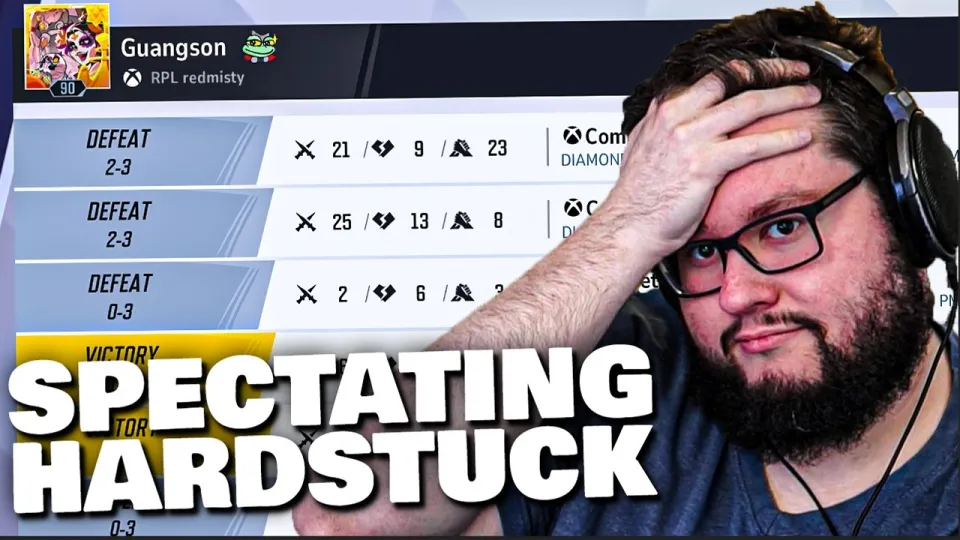
Video: I Spectated Someone Who Claimed To Be Hardstuck In Marvel Rivals
You can order the same kind of articles for your own video to boost it on YouTube and Google. Just message the Telegram bot @sat_sit_bot. It writes articles around your video, embeds the video and publishes them on popular niche websites (no ads). Your first 50 articles are free.
Marvel Rivals is not the game that keeps most players stuck; the habits they refuse to change are. When Flats spectated a self-described hardstuck player, the account turned out to be in Grandmaster, the teammates were mostly doing their jobs, and the losses traced back to one pick played one way: Cloak & Dagger with almost no Cloak. If you want to watch the full breakdown live and see how the coach reads a match in real time, the stream is at Flats on Twitch.
What the Marvel Rivals hardstuck experiment actually showed
The setup was simple: a player wrote in claiming his rank was not his fault, and Flats watched his gameplay instead of arguing. What the spectator view revealed was a Grandmaster lobby where the supposed victim of matchmaking made the same three mistakes on repeat.
- He locked Cloak & Dagger and stayed on Dagger for nearly the entire game, treating the Cloak half of the kit as optional.
- He blamed the backline for not being healed while standing in positions that made healing him a losing trade.
- He chased kills on a support instead of holding the angle his team needed, then called the resulting deaths unlucky.
Flats' read was blunt: the teammates were not holding him back, and in several fights they were the reason the match stayed close at all. The irony the audience picked up on immediately is that the game did prove teammates matter, just not in the direction the player intended. A Grandmaster badge, in this case, described time invested rather than skill demonstrated.
Why Marvel Rivals ranks inflate faster than players improve
Marvel Rivals hands out rank progress generously, and that changes what a rank means. A player can post a losing record across a season and still drift upward, because performance points, protection from demotion and the sheer volume of matches all push the number up. The result is lobbies where a Grandmaster and a Diamond player can look indistinguishable in decision-making.
This is the core of the rank inflation complaint that shows up in every competitive hero shooter, but Marvel Rivals has a sharper version of it. The game is young, the ranked population is large, and the climb rewards hours played more than it rewards correction of errors. Someone with a negative win rate who still reaches Grandmaster is not proof the system is broken; it is proof the system measures attendance. That is also why so many players feel hardstuck at a rank they do not actually belong in.
The Cloak & Dagger problem behind the ego
Cloak & Dagger is the most forgiving support in Marvel Rivals, and that is exactly why it hides bad habits. Dagger's healing is auto-aimed and generous, so a player can keep the team alive while never learning target priority, positioning or when to swap. The Cloak half of the kit, with its damage window, invulnerability and escape, is where the skill expression lives, and it is the half this player skipped.
The viewer reaction that summed it up best was that the player was "playing Dagger holding the Cloak." That is a real pattern in Marvel Rivals: players pick a flexible hero, use 60 percent of the kit, climb on raw healing output, and then wonder why they lose the fights that require a swap. Add a Spider-Man main's mindset, where the plan is always to go in and the blame is always external, and you get a player who cannot see his own mistakes even while a coach is narrating them.
Typical questions from players who think their team is the problem
Spectator reviews like this one generate the same arguments every time, and they are worth addressing directly because they come up in almost every Marvel Rivals rank discussion.
- "My teammates really are bad, though." Sometimes they are. The question is whether your decisions give them a chance. A support who dies in the enemy backline cannot heal anyone, no matter how good the Duelists are.
- "I have a positive win rate, so I deserve to climb." Win rate without context is noise. A 52 percent record over 400 matches is a slow climb; the same record over 40 matches is a small sample.
- "Grandmaster means I am good." In Marvel Rivals, Grandmaster means you played a lot and did not fall. It is a floor, not a certificate.
- "Coaching is just flaming." A good review points at repeatable decisions. If the same death happens five times in ten minutes, that is a habit, not bad luck.
The health pack moment from the stream became the shorthand for all of this: the player walked past a health pack while searching for a health pack. Nobody on the enemy team caused that. No matchmaking algorithm caused that. It was a player not looking at his own screen.
What actually gets you out of a Marvel Rivals plateau
Fixing a plateau starts with accepting that the rank is roughly accurate and the habits are the variable. The players who climb consistently in Marvel Rivals do a small number of things differently, and none of them require a better team.
- Watch one replay per session. Pick a loss, watch only your own deaths, and write down the decision that caused each one.
- Use the full kit. If you lock Cloak & Dagger, learn the Cloak swap. If you lock a dive hero, learn the exit, not just the entry.
- Track your deaths per ten minutes. High death counts on support usually mean positioning, not healing output.
- Stop swapping heroes to fix morale. Switching because the chat is angry rarely fixes the actual problem.
- Check your win rate honestly. A negative record combined with a rising rank is a signal that the rank is inflated, not that you have mastered it.
Where to find Flats and the rest of his Marvel Rivals content
Flats streams Marvel Rivals and Overwatch reviews, spectates players who ask for help, and posts edited breakdowns of the worst and best games. All of the official links are below.
- Twitch, live spectating and coaching: https://www.twitch.tv/flats
- Discord community: https://discord.gg/flats
- Twitter/X updates: https://twitter.com/Flats_Ow
- TikTok clips: https://www.tiktok.com/@flats_ow
- Facebook page: https://www.facebook.com/FlatsTTV
The verdict on Marvel Rivals and the hardstuck excuse
The Marvel Rivals hardstuck story is less about matchmaking and more about what a player is willing to see. Flats' spectator review showed a Grandmaster account with a negative win rate, a one-dimensional Cloak & Dagger, a missed health pack and a long list of external excuses. Rank inflation makes those lobbies possible, but it does not force anyone to stay in them. The players who improve are the ones who treat a coach's silence as information rather than an insult. Watch the full breakdown and more live reviews on Flats' Twitch channel.
Key takeaways
- Flats spectated a Marvel Rivals player who insisted his teammates were the reason he could not climb.
- The account sat in Grandmaster despite repeated claims of being held back by random teammates.
- The player's main pick was Cloak & Dagger, but he spent most of the match as Dagger and rarely swapped to Cloak.
- He walked past a health pack while looking for a health pack, a moment that became the stream's signature clip.
- Flats noted the player had a negative win rate yet still climbed, pointing to how forgiving Marvel Rivals ranked points are.
Source: I Spectated Someone Who Claimed To Be Hardstuck In Marvel Rivals · Markdown version
Questions & answers
Is Grandmaster in Marvel Rivals actually a high rank?
Grandmaster sits near the top of the ladder on paper, but Marvel Rivals awards rank points generously, so the badge often reflects matches played rather than mastered skill. A player can reach it with a losing record and still make the same basic mistakes. Treat Grandmaster as a starting point for review, not proof of competence.
Why does Cloak & Dagger hide bad support play?
Dagger's healing is forgiving and largely auto-aimed, so a player can post strong healing numbers without learning positioning or target priority. The Cloak half, with its damage and escape tools, is where the real decisions happen. Skipping it means climbing on raw output while losing the fights that need a swap.
Can teammates really keep you stuck in Marvel Rivals?
Teammates affect individual matches, but they do not determine a rank across hundreds of games. If the same deaths repeat in review, the habit belongs to the player, not the lobby. The useful question is whether your decisions give teammates a chance to help.
What is the fastest way to stop being hardstuck?
Watch one replay per session and focus only on your own deaths, then note the decision behind each one. Learn the full kit of your main hero instead of half of it, and track deaths per ten minutes as a simple benchmark. Small, repeatable corrections beat hero swapping and blaming the queue.